
Understanding Clogged Ducts & Mastitis

Lactation and Breastfeeding Series (3-Part Series)
Part One: Lactation and Your Pelvic Floor: Explore how lactation impacts the pelvic floor.
Part Two: Posture and Breastfeeding: Posture and breastfeeding positions that help relieve pain.
Part Three: Understanding Clogged Ducts & Mastitis (this blog): Recognize and manage clogged ducts.
Part Three: Understanding Clogged Ducts & Mastitis
Welcome back to our three-part Lactation and Breastfeeding Series. In Part One: Lactation and Your Pelvic Floor, we explored how hormonal shifts during breastfeeding can affect pelvic floor function, comfort, and recovery. In Part Two: Breastfeeding and Your Posture, we talked about the neck, shoulder, and back discomfort that’s so common in the early postpartum season—and how small adjustments in positioning can make feeding sessions feel easier.
In Part Three, we’re focusing on two breastfeeding challenges that many new parents experience: clogged ducts and mastitis. These issues can be painful, frustrating, and sometimes confusing to navigate, but understanding what’s going on inside the breast can make a world of difference.
In this blog, we’ll break down the signs, causes, and most up-to-date management strategies so you can feel more informed, supported, and empowered while feeding your baby. So let’s get started!
Clogged Ducts & Mastitis
Breastfeeding can come with a variety of hurdles, including latching issues, painful feeds, milk supply concerns, engorgement, ductal narrowing (clogged ducts), and mastitis. Our goal as pelvic health physical therapists is to help you identify whether there is a problem, when to seek help, and whom to consult.
At Pelvic Health and Wellness, we have the luxury of spending a full hour with you during our sessions, where we inevitably get to chatting about things besides just your pelvic floor. Breastfeeding questions come up all the time, and we want to be ready to support you and help you feel confident during this stage. Hopefully, this blog post can offer some guidance as well.
This blog specifically focuses on ductal narrowing (clogged ducts) and mastitis. These are two of the most common breastfeeding challenges. Clogged ducts occur in about 20% of breastfeeding people (1 in 5), and mastitis develops in around 10% (1 in 10).
First, a Quick Look at Breast Anatomy
To understand how clogged ducts and mastitis happen, it helps to first review basic breast anatomy. Below is a picture of the structures within a female breast.
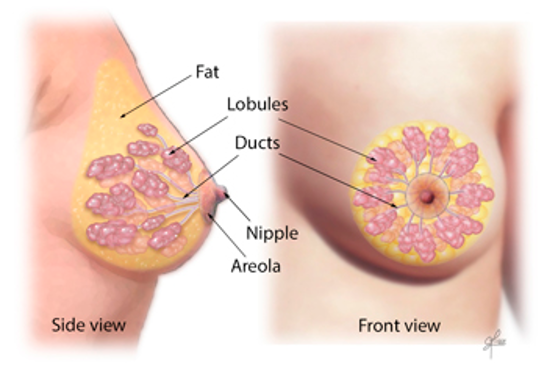
The pink structures in the breast (lobules) are where milk is produced during lactation.
Milk travels from the lobules through small passageways called ducts, which transport milk to the nipple. Surrounding these structures is yellow adipose (fatty) tissue, which makes up most of the breast.
Image credit: Cleveland Clinic
Ductal Narrowing (Clogged Ducts) vs. Mastitis
What are Clogged Ducts?
Clogged ducts occur when the tissue surrounding the ducts, usually the lobules, becomes inflamed and compresses or narrows the ducts. Although it’s commonly called a ‘clogged’ duct, nothing is actually physically plugging up the ducts. Rather, they are pushed closed from the swollen tissue.
Common Symptoms of Clogged Ducts Include:
Decreased milk flow
Localized tenderness or discomfort
A firm, warm, or swollen area
Redness in a specific spot
A hard area that softens or shrinks after a feeding
We will discuss the specifics of clogged duct treatment below, but the most important thing to note is that clogged ducts are not an infection. You should not have flu-like symptoms such as fever, chills, or body aches.
Common Causes of Clogged Ducts
Clogged ducts often stem from localized and restrictive pressure against the blood vessels of the breast, or changes in milk removal. Examples include:
Tight-fitting bras, shirts, compression, or underwire
Pressure from a diaper bag strap, purse, backpack, or seatbelt pressing against a spot on the breast
Sleeping directly on the breast
Missing or skipping feeds
Regularly feeding from only one breast
Failing to fully empty the breast each feed
What is Mastitis?
Mastitis is an infectious (but noncontagious) condition that leads to inflammation of the breast tissue. It occurs when bacteria enter through cracked nipples or small openings in the skin.
Common Symptoms of Mastitis Include:
Worsening pain, tenderness, and swelling
Redness or warmth over a large area of the breast
Body-wide symptoms such as fever, chills, or body aches
Possible discharge from the nipple
Because mastitis is bacterial, it typically responds well to antibiotics prescribed by your provider.

Image credit: Rachel O’Brien IBCLC @rachelobrienibclc
How to Manage Clogged Ducts
In 2022, the Academy of Breastfeeding Medicine published updated guidelines that outline evidence-based early postpartum approaches to relieve clogged ducts. These guidelines also discuss methods that are no longer supported.
Because clogged ducts result from inflammation, the most compelling evidence is that inflammation and swelling should be reduced. Below are the most up-to-date do’s and don’ts for managing clogged ducts.
DO’s for Managing Clogged Ducts:
Wear loose-fitting clothing to avoid pressure on breast tissue
Ice for 10 minutes every hour
Lymphatic drainage / light massage
Gentle upward strokes toward the armpit or collarbone
Our therapists at Pelvic Health & Wellness are trained in hands-on lymphatic drainage to help reduce swelling in the breast area
Feed on demand, watching for your baby’s hunger cues instead of on a schedule
Feed from both breasts
Leave milk blebs (milk trapped under the skin of the nipple) intact (opening the skin contributes to inflammation and bacterial colonization)
Consult a trained provider about therapeutic ultrasound
Consider OTC medications for support:
NSAIDs (like ibuprofen) for inflammation
Acetaminophen (Tylenol) for pain
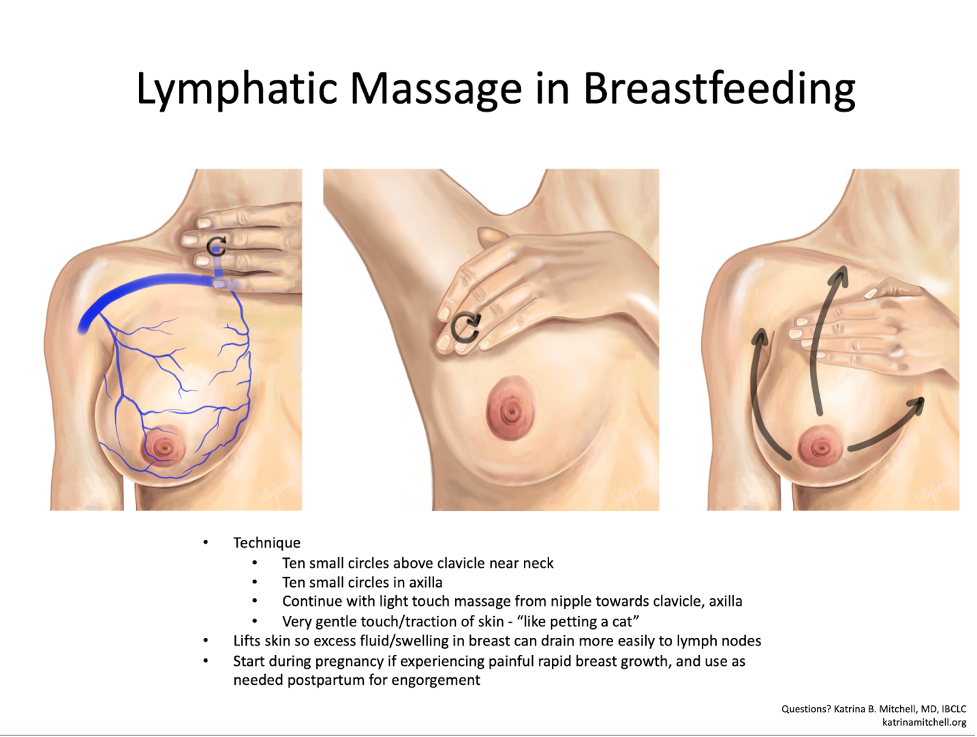
Image credit: American Breastfeeding Academy
DON’Ts for Managing Clogged Ducts:
Deep pressure massage (can worsen inflammation)
Heat packs (can also worsen inflammation)
Dangle feeding (not effective and may be an unsafe position for your infant)
Feeding or pumping continuously to empty the breast (your body relies on a feedback system for producing milk—increased removal of milk means your supply will rise and make the issue worse)
Use of a breast pump (may contribute to tissue damage if the equipment is inappropriately fitted, and also does not provide the same way of extracting the milk as an infant would)
Nipple shields (can affect milk removal)
Antibiotics (unless your symptoms clearly indicate bacterial mastitis, in which you are experiencing body-wide flu-like symptoms)
Routine sterilizing of equipment and household items (clean pump parts appropriately, but if it is mastitis, it is not contagious and does not result from unhygienic practices)
How We Can Help
The Pelvic Health and Wellness team can help you manage minor breastfeeding concerns, address clogged ducts through lymphatic drainage techniques, and support your posture and overall well-being during breastfeeding. When needed, we can also help connect you with the right specialists, including the wonderful IBCLCs at Wisco Lactation.

About Pelvic Health & Wellness
Pelvic Health & Wellness was built with you in mind. We practice whole-person, individualized pelvic floor physical therapy in a caring and safe environment. Our physical therapists specialize in treating pelvic health concerns such as pelvic floor dysfunction, bowel and gut health, pelvic pain, pelvic organ prolapse, constipation, incontinence, fertility, and various pregnancy and postpartum-related conditions.
We understand that being ready to talk about and address your pelvic floor wellness concerns comes from a place of strength. We are here to support and encourage you on your journey back to health so you can return to doing what you love! If you are ready to take the first step in reclaiming your pelvic health and wellness, don't hesitate to get in touch with us today.
